Too many dental laser consumables on the shelf can leave you with expired diode tips and wasted spend. And if you keep too few, you’ll risk delaying treatment with a frustrated patient already in the chair. The right stock level keeps costs under control while making sure your team has what it needs for scheduled procedures.
Storage space isn’t the only thing at stake here. Every unused fibre tip or protective cover ties up cash that could go toward staff wages or new dental equipment inventory. A clear ordering system fixes this without adding extra admin work.
The article covers what counts as a dental laser consumable and why overordering costs more than expected. We’ll also cover how to build a simple reorder system. Stick around, and you’ll have a practical plan by the end.
What Counts as Dental Laser Consumables?
Dental laser consumables are the disposable parts that need regular replacement, like fibre tips, protective covers, and eye shields. They’re separate from the laser unit itself, which is reusable equipment.
Below is a breakdown of the most common types and how often they need restocking:
| Consumable Type | Examples | Typical Replacement Frequency |
| Fibre Tips | Diode laser tips, cleaved tips | Every 5–10 uses or when charred |
| Protective Gear | Eye shields, patient glasses | Per patient or per session |
| Cleaning Supplies | Tip cleaving stones, wipes | Ongoing, restocked monthly |
A snapped fibre tip mid-procedure is the kind of surprise every dental team wants to avoid. Knowing how quickly each consumable runs out helps you set practical reorder points and keep enough stock ready for scheduled treatments.
You can base stock levels on real-life use rather than filling shelves with supplies that may sit unused for months.
Why Overordering Increases Your Supply Costs
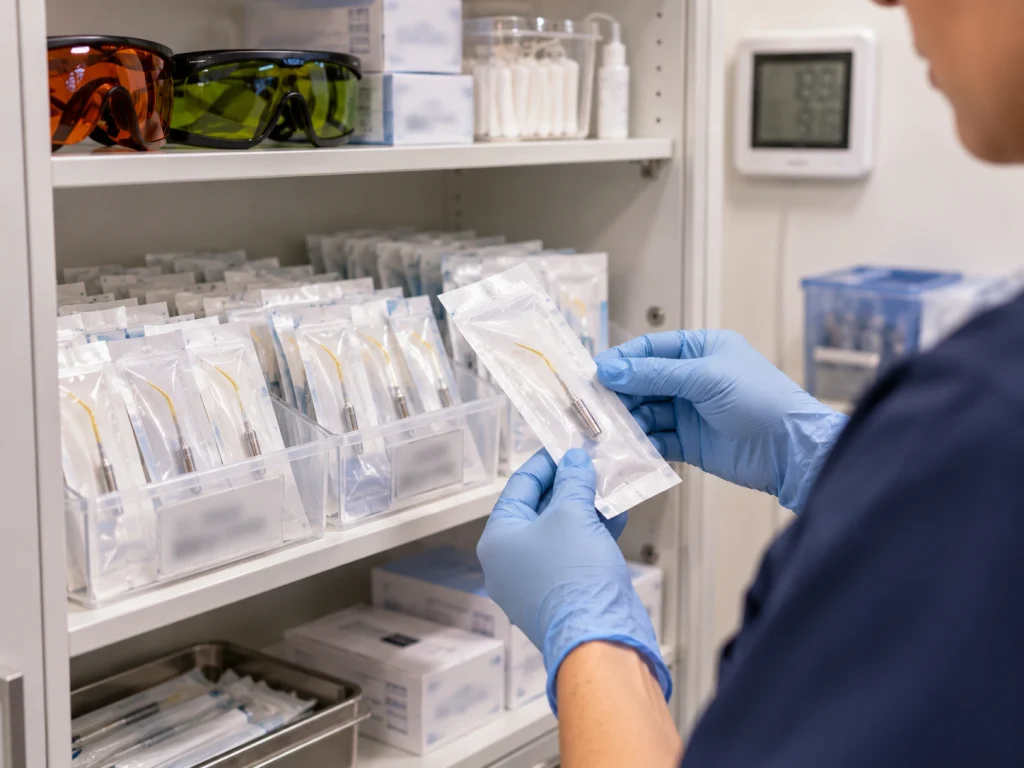
The real cost of overordering rarely shows up on the invoice itself. It hides in storage space, expired stock, and cash you can’t use elsewhere. So naturally, it pays to know exactly where that cost comes from:
Shelf Life and Storage Limits on Diode Laser Tips
Diode laser tips have a set shelf life, and once it passes, performance and safety both drop. In practices we’ve worked with, tips that sat past their use-by date were often the first thing pulled from the drawer. That’s rarely a welcome discovery mid-week.
Heat and humidity can also accelerate material degradation during storage. A tip stored near a window or heat source may deteriorate sooner than one kept in a cool, dry drawer. Proper storage can help preserve the tip’s condition throughout its intended shelf life.
And once a tip degrades, it’s no longer safe to use on a patient. This expired stock becomes pure loss rather than a delayed saving. That’s why you should check expiry dates every month to catch this issue early.
Cash Tied Up in Unused Dental Equipment Inventory
You already know that cash sitting on a shelf isn’t doing your practice any favours. Bulk orders might look like a discount, but the money stays locked up until every item gets used.
Meanwhile, that money could cover immediate practice expenses such as wages, repairs, or new equipment. Every dollar tied up in unused stock is a dollar not working elsewhere. It’s a trade-off worth weighing before placing a large order.
With that in mind, smaller and more frequent orders keep cash moving where it’s needed most. This approach also makes it easier to spot slow-moving items early. Your budget stays flexible instead of locked into last quarter’s guess.
Building a Consumables Ordering System That Works
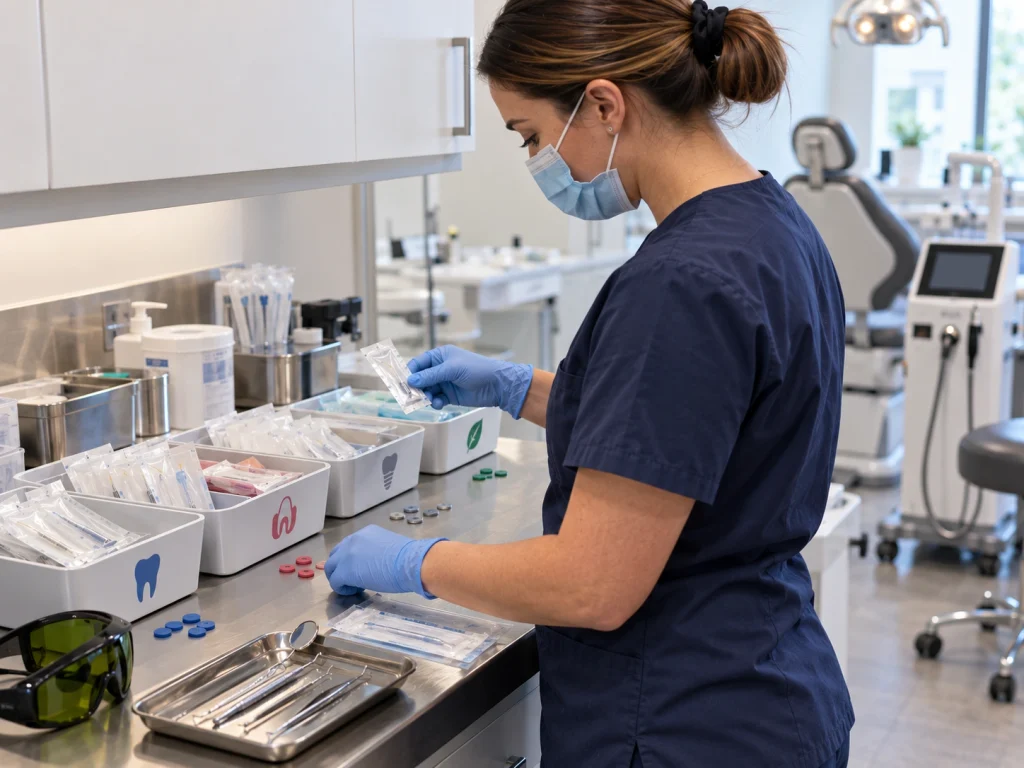
Ordering systems sound complicated until you realise most of it runs on a simple spreadsheet. And once the basics are in place, the whole process runs on autopilot.
Here’s how to put one together step by step:
Track Usage by Procedure Type
Different procedures use different amounts of tips, fibres, and protective gear. Once a practice actually starts logging usage by procedure, the patterns become obvious within a few weeks.
For example, a frenectomy might use a single tip, while a longer soft tissue procedure needs two or three. Tracking this by hand or in a simple spreadsheet works fine to start. Either way, the goal is visibility over perfection.
Over time, this record becomes the base for every future order. You’ll know exactly what to expect each month. That certainty alone removes a lot of the stress around reordering.
Set Reorder Points for Dental Laser Accessories
Now that you know what you’re using, the next step is knowing exactly when to reorder. A reorder point marks the stock level that triggers a new order before you run out. It gives your team a clear number to act on before supplies get too low.
Once stock hits that point, add the item to your cart and place the order that day, not next week. Waiting even a few days can turn a minor gap into a rushed, last-minute scramble. Building this cart habit early keeps the whole system predictable.
Keep in Mind: Patient volume shifts, and so does procedure mix. A quarterly check of the reorder points keeps the whole system aligned with real demand.
Keep a Buffer Stock Without Going Overboard
If you’re the type who likes to stock up “just in case,” a small buffer will scratch that itch without draining your budget. Buffer stock protects against supplier delays or a sudden busy week. The key is keeping it small.
From our experience with dental consumables, keeping 10–15% more fibre tips than your monthly average usually covers supply delays. Protective gear needs less cushioning, since it’s cheaper and easier to reorder. Matching the buffer size to the item type keeps things efficient.
Keeping too much buffer stock can bring back the same overordering problems discussed earlier. Cash gets tied up again, and shelf space fills with stock you don’t need yet. Small and steady wins out here.
Can Small Practices Manage This Without Extra Staff?
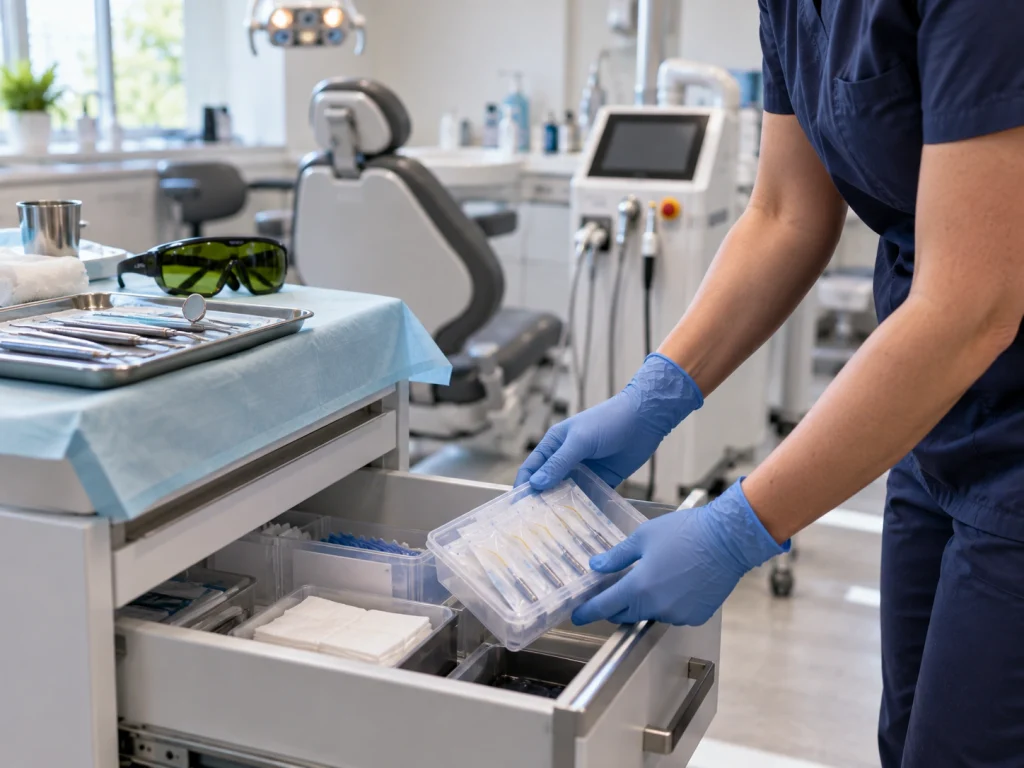
Yes, small practices can manage this with basic tracking tools and a few minutes each week. Most practices find it takes less time than expected, often under 15 minutes a week.
A few common questions usually come up when practices start tracking their consumable stock:
How much time does inventory tracking take?
Once the system is set up, checking stock levels and updating a cart takes around 10 to 15 minutes a week. That said, the setup itself takes longer, usually an hour or two at the start.
Do I need software, or is a spreadsheet enough?
A spreadsheet works fine for most small practices, especially early on. Dental inventory software, such as Sortly or Sowingo, can help as order volumes grow or more staff manage stock.
How often should reorder points be reviewed?
Every three months works well for most practices. Sudden changes in patient volume are the main reason to review sooner.
Your Next Reorder Starts Here
Overordering and underordering both come from the same root problem: not knowing your real usage. Tracking consumables by procedure, setting clear reorder points, and keeping a small buffer fixes that for good. And the best part is, none of it requires extra staff or complicated software.
Starting with just one item, like diode laser tips, builds the habit before rolling it out further. Small, consistent steps beat a complete system built overnight.
If your practice wants help setting up a dental laser accessories ordering plan, our team at Dental Laser Therapy is ready to talk it through. With over 20 years in dental healthcare, we know what a well-run inventory system should look like.
Reach out today, and let’s get your ordering process running smoothly and keep your team happy.