Dental lasers improve precision in hard-to-reach areas by using focused light to target specific tissues without the noise and vibrations you get from traditional drills. This approach gives dentists better control when working on problem spots that standard tools can’t safely access.
On the other hand, traditional methods struggle when it comes to visibility and control. Drills and scalpels, for instance, can cause bleeding and tissue movement, which can block a clear view of the treatment area. On top of that, they can accidentally damage the healthy tissue around the work area.
Because of these differences, dentists are increasingly turning to laser-based techniques for more complex cases. In this article, we’ll cover how dental laser precision works, where it helps the most, and how it’s changing complex dental care. Read on to find out.
How Dental Laser Precision Works in Modern Dentistry
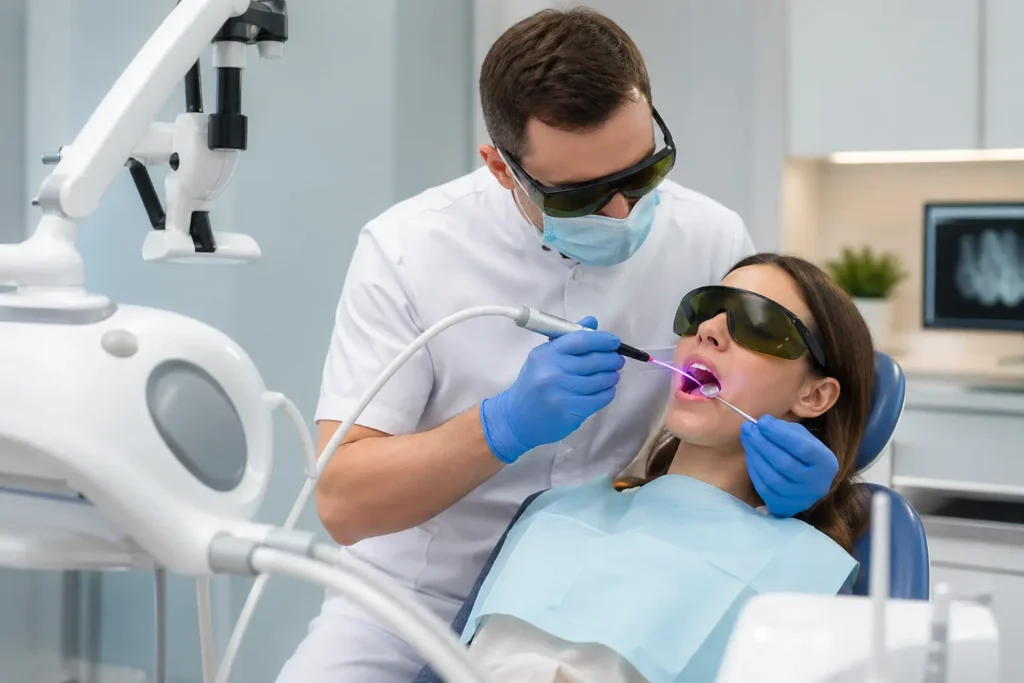
Dental laser precision works by using focused beams of light at specific wavelengths to target problem tissues while leaving healthy areas untouched. The laser distinguishes tissues by their water and mineral content, which is what makes that precision possible.
Now let’s walk through exactly how this technology works in your dentist’s chair.
What Is Laser Dentistry and How Does It Work?
As we mentioned, laser dentistry uses concentrated light energy to treat both hard and soft tissues in your mouth. The laser beam removes tissue one cell layer at a time without actually touching the area. This no-contact approach is a big part of why laser procedures feel so different from traditional ones.
What makes this even more useful is that the laser can spot the difference between healthy gum tissue and infected gum tissue based on how each one absorbs the light. So your dentist can remove what’s damaged and leave everything else alone. That’s why it’s a much more targeted way to treat oral health problems.
The Role of Carbon Dioxide and Other Dental Lasers
Now, not all dental lasers do the same job, and that’s actually a good thing. Carbon dioxide lasers are mainly used for soft tissue work, like reshaping gums or treating mouth lesions. In contrast, erbium lasers are used for harder surfaces, including cavity preparation in teeth.
This difference exists because each laser targets a specific type of tissue. For instance, soft tissue lasers focus on hemoglobin and melanin in the gums, while hard tissue lasers target the water content in teeth and bone. As a result, each wavelength serves a different purpose, which is why dentists choose the laser based on the type of treatment needed.
How Dental Laser Precision Is Achieved
Dental laser precision comes down to three settings your dentist can control during treatment. Based on our experience with ASA dental lasers, here’s what makes this level of accuracy possible:
- Controlled Power Output: Your dentist will adjust how strong the laser is depending on the tissue they’re treating. For more sensitive areas, they’ll lower the intensity to keep the treatment gentle. And when they need a bit more intensity, they simply turn it up. This flexibility means each treatment is matched to exactly what your mouth needs.
- Minimal Heat Spread: One of the best things about dental lasers is that the energy stays focused on one spot. Because of this precision, the healthy tissue next to the treatment area stays cool and untouched. That’s a big reason why so many patients say lasers feel much more comfortable than traditional drills.
- Targeted Treatment Zones: Your dentist can work on areas as small as a single cell layer (which is pretty amazing when you think about it). This kind of control lets them achieve precise results even in tight spots near the back of your mouth where drills would normally struggle.
All three of these settings work together to give your dentist the accuracy they need when treating hard-to-reach or challenging areas.
The Role of Digital Dentistry In Improving Accuracy
Digital imaging allows dentists to plan treatments more carefully before the procedure begins. For example, digital X-rays show exactly where problem areas are and how close they are to healthy tooth structure.
Your dentist can map out with that information the full treatment ahead of time since they know what needs work and what to leave alone. This way, they reduce surprises during the procedure and achieve better overall outcomes.
How Artificial Intelligence Is Determining Precision
Today, Artificial intelligence (AI) is helping dentists with diagnosis and treatment planning by analysing digital scans much faster than a human can. It can also detect problem areas that may be difficult to notice during a regular check-up.
And if cases get more complex, AI can suggest the best approach based on data from thousands of similar treatments. This can help dental professionals make better decisions, especially when multiple visits or different procedures are on the table.
Laser Dentistry Advantages for Gum Disease and Dental Implants
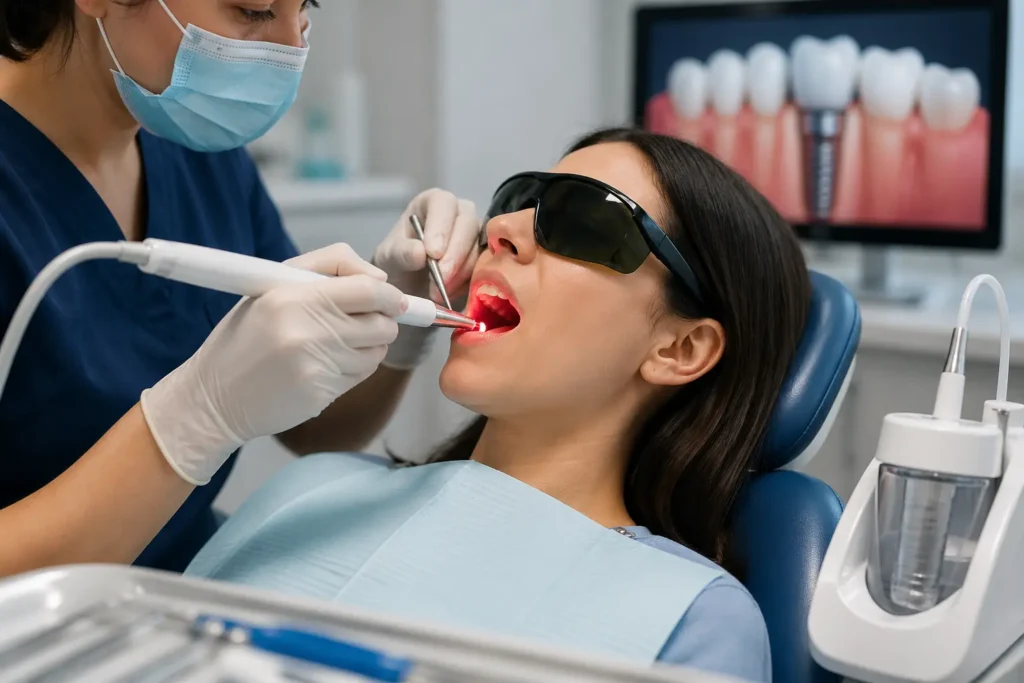
Laser dentistry shows its advantages most clearly in procedures where precision is important. Particularly, in treatments like gum disease care and dental implant placement, lasers give dentists better control when traditional tools are less effective.
This is how that plays out across different treatments.
Applications Across Different Procedures
Lasers are already used in a wide range of dental procedures, and the list keeps getting longer. Take a look at some of the most common ways they’re used:
- Gum Disease Treatment: Deep gum pockets can be tough to clean with traditional tools. Lasers get below the gumline and remove infected tissue and bacteria without disturbing the healthy gums around it. That means less bleeding and faster tissue repair after your visit.
- Early Stage Cavity Removal: In cases of minor decay, lasers can remove damaged areas while leaving more of the healthy tooth untouched. Our team has found that patients prefer this approach because it often means no needles and less time in the chair.
- Cosmetic Procedures: If you’ve ever felt a bit self-conscious about a gummy smile, your dentist can use a laser to gently reshape the gumline for a more balanced look. You can even use lasers to speed up teeth whitening by activating the whitening agents more quickly.
As you can see, what connects all of these treatments is improved accuracy with less discomfort. Across different procedures, lasers give dentists better control over the treatment area. As a result, patients often experience a smoother recovery and get back to normal faster after their dental visits.
Key Laser Dentistry Advantages For Patients
Of course, the ultimate reason patients are drawn to laser dentistry is comfort. Laser procedures feel very different from traditional ones, and the recovery tends to be much smoother as well. Here’s what you can expect from the treatment:
- Reduced Pain and Discomfort: Lasers naturally numb the area they’re treating, so many patients don’t need anaesthetic injections at all. If needles make you nervous about dental visits, this alone can change your whole dental experience.
- Minimal Bleeding and Swelling: On top of that, lasers seal blood vessels and nerve endings as they work. This means far less bleeding during and after the procedure. It also means less swelling in the days that follow (which makes the whole recovery a lot more comfortable).
- Faster Healing and Shorter Recovery Time: Perhaps the best part of lasers is that they sterilise the treatment area while they work, which lowers the risk of infection. In addition, many laser treatments don’t need stitches at all, so your recovery time can be half of what you’d expect with traditional methods.
This way, you can face fewer complications and recover more quickly. It also helps you return to your normal routine sooner, which makes laser dentistry a major step forward for most patients.
Dental Technology, Safety, and the Future of Advanced Dental Treatment
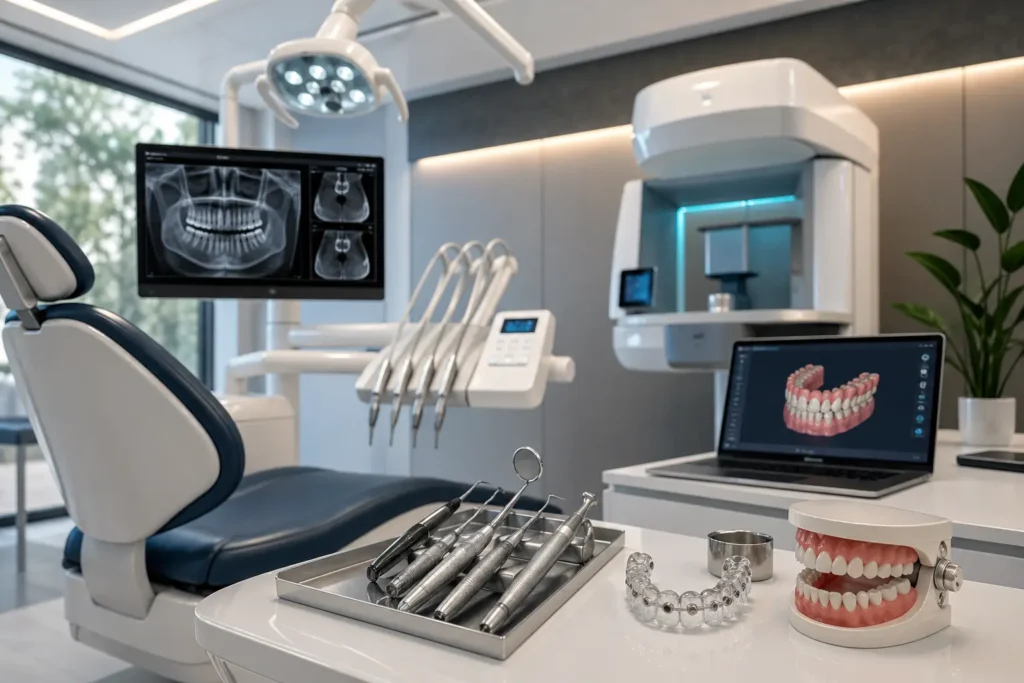
What do you think about dental lasers so far? Pretty impressive, right?
Now, before you book in, it’s worth knowing that safety always comes first with any laser procedure. Both you and your dentist will wear protective eyewear during treatment to protect your eyes from the laser light.
On top of that, dental clinics follow strict safety protocols and practitioners complete specialised training before they use the equipment. So as long as you choose a qualified dentist with proper certification, you’re in safe hands.
And the good thing is, this technology is only getting better with time. The combination of lasers with digital dentistry and artificial intelligence is already making treatments more accurate and reliable. As these tools keep improving, we’ll likely see lasers used across even more procedures in the years ahead.
If you’d like to learn more about how dental laser precision can improve your next visit, our team at GPIAG has over 20 years of experience. And we’re always happy to chat.