Are you avoiding dental visits because you dread the drill, the discomfort, or the long recovery afterwards? We often see patients delay necessary dental procedures simply because traditional methods feel too invasive or painful.
But dental laser therapy is changing the way dentists approach oral health problems. This technology gives you a gentler option for treating gum disease, tooth decay, and soft tissue issues.
In this guide, we’ll share how laser treatment works, when your dentist might use it, and what to expect during your appointment. We’ll also explain how it fits into good oral hygiene and can make your next visit easier.
We’ll start with what lasers do during dental treatment.
What Is Dental Laser Therapy and How Does It Work?
Dental laser therapy uses focused beams of light energy to treat your teeth, gums, and soft tissue without needing traditional drills. The laser targets specific problem areas and leaves the healthy parts of your mouth alone.
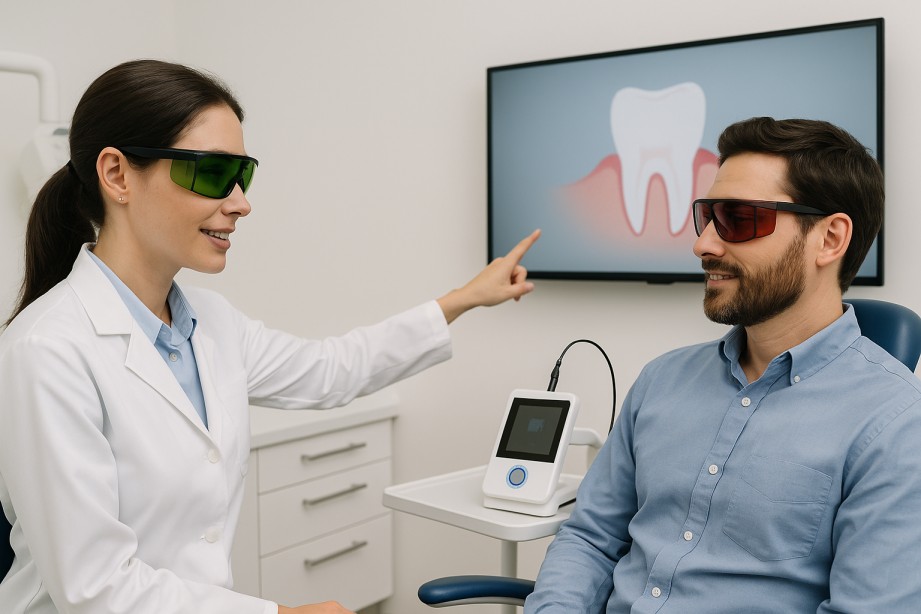
Let’s break down what this means for you.
How Lasers Interact with Your Teeth and Gums
The laser sends concentrated light energy (the one you call laser beam) that your dentist controls with remarkable accuracy. This energy removes bacteria, reshapes gum tissue, or prepares your tooth enamel when you need fillings.
As it works, the light also seals blood vessels in the treatment area to reduce bleeding and help your mouth heal faster than with conventional methods.
Types of Lasers Used in Dentistry
The type of laser depends on the procedure. In most cases, dentists will choose either a diode or a multiwave locked system laser.
Diode lasers perform best on soft tissue treatments. Your dentist might use these to reshape your gum line or treat gum disease around your teeth.
Multiwave locked system lasers, however, are more versatile since they handle both hard and soft tissue. This makes them useful for a wider range of dental treatments.
You’ll notice that most modern dental practices have at least one type of laser system available for patients these days.
Where Laser Dentistry Fits into Treatment
Dentists rely on laser treatment for several everyday oral health problems. It works particularly well for removing tooth decay before your dentist places a filling.
Laser dentistry can also treat periodontitis and gingivitis by removing infected gum tissue and harmful bacteria that sit below your gum line. And if you need a procedure like a tongue-tie release, laser precision can make it a more comfortable experience, too.
Why Choose Laser Dentistry for Your Dental Treatment
Patients often choose laser dentistry because it reduces pain, bleeding, and recovery time, which makes dental visits easier and more comfortable.

Here’s what laser dentistry can do for you.
Comfort and Confidence
If we haven’t made it clear already, one of the main advantages of laser treatment is how much more comfortable you’ll feel during your appointment.
Laser procedures often need less anaesthesia than traditional methods, so you’ll get fewer injections. The precision of the laser also means less pain during treatment, which we’ve seen calm patients’ nerves during regular dental visits.
What’s more, many patients tell us they feel more confident about getting the care they need when their dentist uses lasers.
Healing and Recovery
Our body responds remarkably well to laser treatment. Because the laser promotes healing by gently stimulating your tissue while reducing inflammation at the same time. So you’ll notice less swelling after your procedure.
Most patients heal faster, too. This means you can get back to eating normally and enjoying your day much sooner than traditional methods.
What Laser Treatment Can’t Do
Now, laser dentistry isn’t the right answer for every dental problem. Some procedures, like large cavities, some root canals, or complex tooth shaping, still work better with traditional tools and methods.
The cost can also be higher at practices that offer laser treatments, and not every dental surgery has this technology available yet. We advise talking to your dentist to see if laser therapy will suit your specific oral health needs.
Now these benefits sound promising, but you might be wondering what conditions actually respond well to laser treatment. Let’s look at the specific dental problems that lasers can address.
Laser Solutions for Gum Disease, Cavities and More
Laser dentistry works great for some of the most common oral health problems you might face, like gum disease and tooth decay. We’ll discuss how your dentist might use this technology to treat these specific conditions in this section.
Laser Therapy for Gum Disease
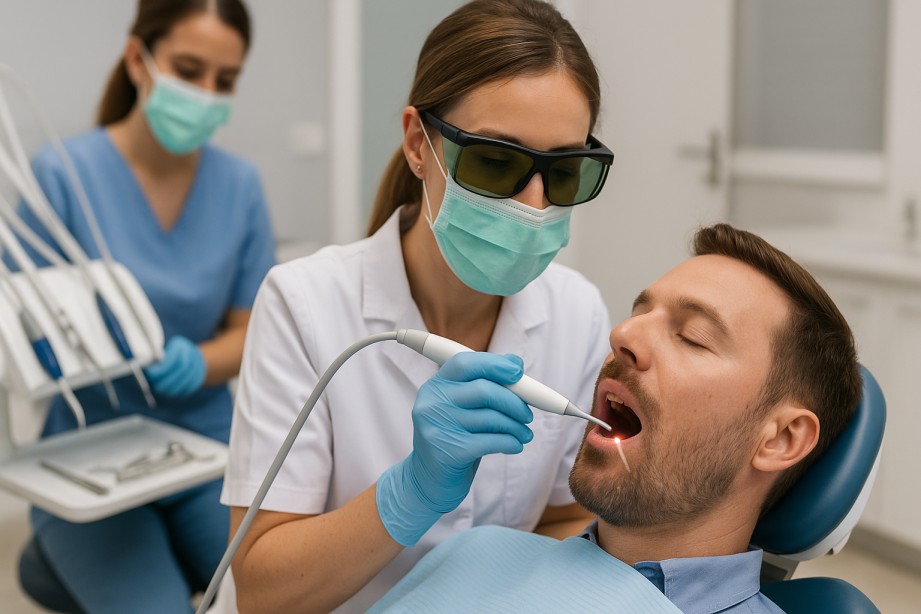
Like we mentioned earlier, laser treatment can remove infected tissue around your teeth and clean the area below your gum line. This kills the harmful bacteria that can cause gum diseases like gingivitis and periodontitis.
Many patients find this method much more comfortable than traditional scaling and root planing procedures.
Tooth Decay and Cavity Care
You don’t have to fear that dreaded drill sound anymore. Precision laser tools can remove the decay from your tooth and prepare it for a filling in one go. The laser does this by only targeting the damaged enamel and leaves all your healthy tooth structure alone.
You’ll also have less sensitivity afterwards compared to the old drilling methods.
Oral Cancer and Biopsies
Lasers and special light-based tools (like autofluorescence devices) can help your dentist spot unusual tissue changes early.
They don’t replace a biopsy, but if your dentist sees something concerning, they can use a laser to take a small tissue sample with minimal discomfort. You’ll still get the accurate diagnosis you need to move forward with the right treatment plan.
Your Next Steps Toward Easier, More Comfortable Dental Visits
So, do you feel more at ease about laser dentistry now?
You don’t have to put up with painful dental procedures or long recovery times anymore. Dental laser therapy will continue to bring improvements to your oral care experience with less discomfort and faster healing than traditional methods.
Here’s a quick recap of what laser dentistry offers you:
- Less pain during treatment and reduced need for anaesthesia
- Faster healing process with less swelling and bleeding
- Precise treatment that protects your healthy tissue
- Gentler care for anxiety-prone patients
Ready to explore gentler dental care options? Visit GPIAG to learn more about modern dental treatments and find a provider near you.