Does the idea of adding laser technology to your practice feel overwhelming? If so, you just need help picking the right equipment for your clinic. And we’re here to help.
We know many dentists and clinic staff who find it hard to connect laser theory with everyday practice. And frankly, the main challenge is choosing between different wavelengths, power levels, prices, and maintenance needs.
On top of that, you have to deal with technical terms, marketing claims, and safety rules, which can make the decision even more confusing.
That’s exactly why we created this guide. We’ll break down dental laser basics, simplify the science, and give you practical advice to help make informed choices for your clinic.
First, we’ll cover the basic laser categories and where they’re used in daily practice.
Types of Dental Lasers and How They’re Used in Clinical Practice
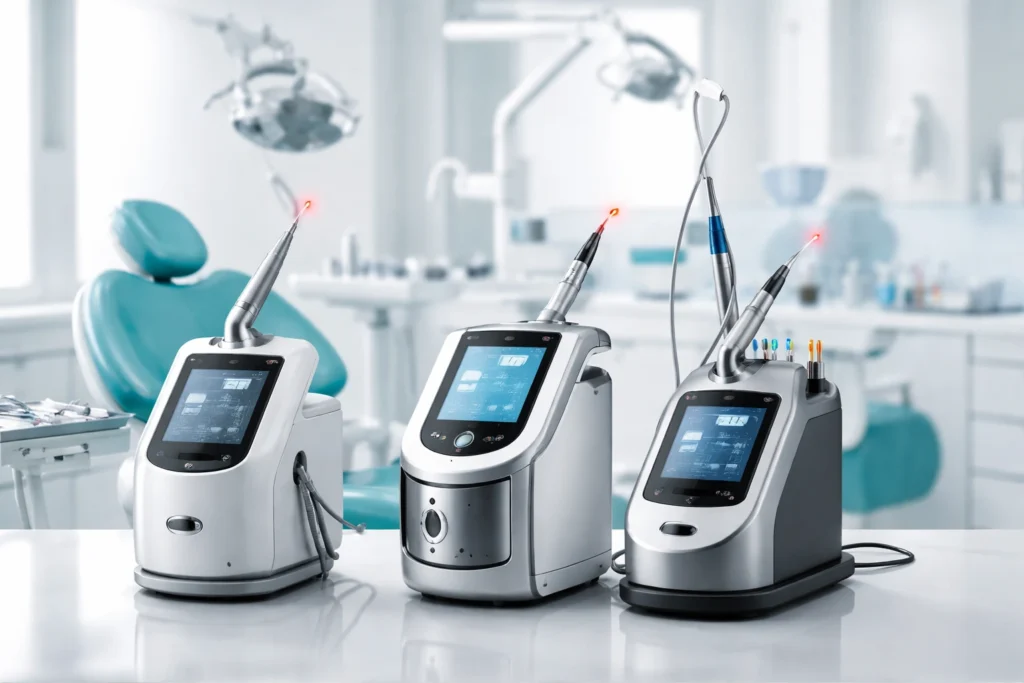
Dental lasers are generally grouped into two main types: soft tissue lasers and hard tissue lasers. Each one uses a specific wavelength to treat different areas of the mouth.
Let’s look at how each type works and where it fits into your daily practice.
Understanding the Science: Stimulated Emission and Laser Light
Lasers produce a focused beam (or laser beam) through a process called stimulated emission. In simple terms, atoms release energy in a controlled way to create a strong, precise light. And because this light is so concentrated, you can remove the targeted tissue accurately while protecting the surrounding areas.
What makes this interesting is that different wavelengths work on different types of tissues.
Soft tissue absorbs some wavelengths more easily, while hard tissue like enamel responds better to others. So when you match the right wavelength to your target tissue, your treatment becomes more effective and safer for the patient.
Soft Tissue Lasers
Diode lasers are the most common choice for soft tissue work in general practice, and it’s easy to see why. They’re compact, simple to use, and great for gum reshaping, frenectomies, and reducing bacteria during periodontal treatment. Many clinicians (including us) also like them because they promote faster wound healing.
Now, argon lasers have been around longer, and a few clinics still keep them on hand for specific tasks. They’re mainly used for curing light-sensitive materials(like composite fillings and sealants) and have some germ-killing properties.
That said, most practices today prefer diode lasers because they offer more versatility and cost less to run.
Hard Tissue Lasers
When you need to work on hard tissues like teeth or bone, erbium lasers (particularly erbium YAG lasers) are your best choice. They absorb well into water and the minerals found in enamel, so they’re perfect for cavity prep and bone contouring. Patients also often find these procedures more comfortable than traditional drilling.
Erbium lasers have another advantage: they produce less noise and vibration during treatment, so many patients feel less anxious without the familiar sound of a drill. Plus, we’ve noticed that patients often experience less sensitivity afterward, which makes these lasers worth considering if patient comfort is a priority in your practice.
Diode vs. Erbium Lasers: Which Type Fits Your Practice?
Now, the best laser for you will depend on what procedures you perform most often.
If your focus is periodontal therapy or minor soft tissue surgeries, a diode laser will handle most of your needs. But if you do more fillings and restorative work, an erbium laser will give you better precision on hard tissue.
Regardless of which type you choose, safety should always come first when using any laser equipment. You’ll need proper training, the right protective eyewear, and a solid understanding of how lasers interact with tissue.
Start with one laser type and build your skills before adding more (this works best for most new dentists).
What New Dentists Should Know Before Using Lasers
Before you invest in any laser equipment, you need to understand the costs, training requirements, and clinical limitations involved.
Let’s walk through the practical side of adding lasers to your practice. These tips will help you make informed decisions and avoid common mistakes.
Equipment and Upkeep Costs
Professional diode laser systems usually cost between $2,000 and $15,000. This makes them affordable for most general dental practices, like routine checkups, cleanings, and minor soft tissue procedures. Erbium lasers, however, are more expensive, often running between $30,000 and $60,000 because they can work on both soft and hard tissue.
You also need to set aside money for extras like protective eyewear, fibre tips, and regular maintenance. Since these consumables wear out or need replacement regularly, we recommend planning for their ongoing cost from the start.
However, you’ll recover your investment through faster procedures and happier patients (we can confirm that from experience). Your patients will notice the reduced discomfort and quicker healing, which often leads to more referrals and repeat visits.
Training Requirements
You need proper training before you can legally and safely operate dental lasers in a clinical setting. In Australia, most states have radiation safety rules that cover laser equipment, so you’ll need to finish approved courses first.
And make sure to get as much hands-on experience as you can. Yes, textbooks can teach you the settings. However, practicing on models and patients will help you see how the laser actually reacts to different tissues, feel the right pressure, and adjust speed and angles.
We recommend completing the Academy of Laser Dentistry’s certification programs to build your expertise and confidence.
Everyday Integration into General Practice
Once you’ve completed your training, lasers can fit easily into many routine procedures. They are especially helpful for dental implants, like treating peri-implantitis or promoting tissue healing around the implant site. Soft tissue lasers also make gingivectomies and crown lengthening faster and more comfortable for patients.
Hard tissue lasers, on the other hand, are useful for detecting caries and preparing cavities. Many clinicians also use less anaesthesia during these procedures. Patients often feel more relaxed as well because the experience is quieter than a traditional drill.
When Not to Use Lasers
Lasers aren’t the answer for every situation. Some procedures still work better with traditional instruments, and knowing when to switch is part of being a good clinician.
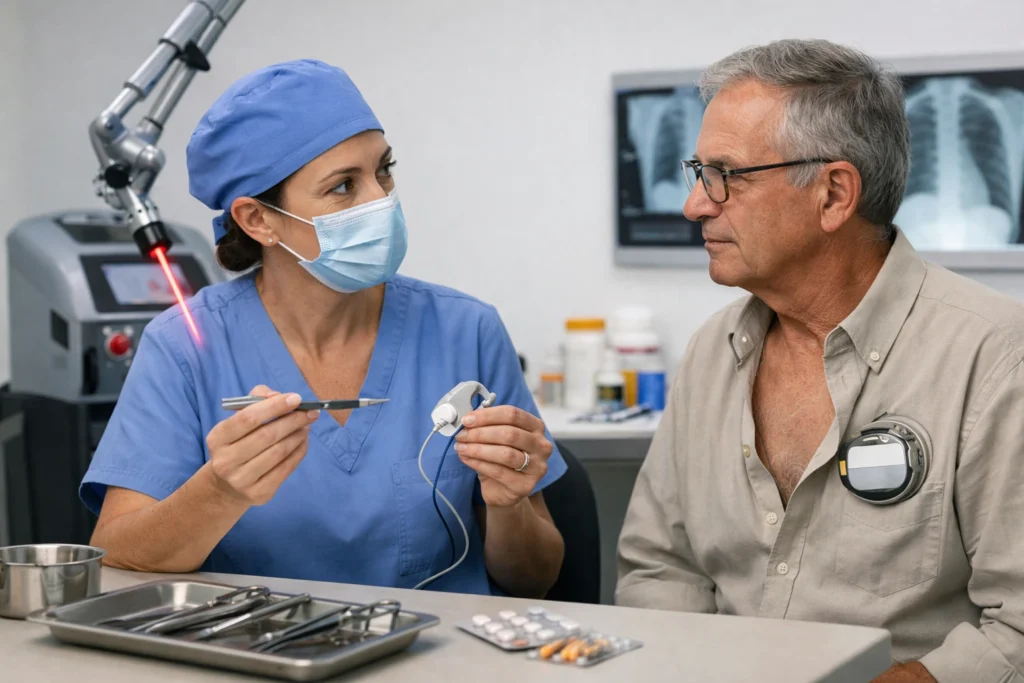
Some patients require extra care before you use a laser. For example, people with pacemakers may need special precautions, and certain medications can change how their tissue reacts.
So always remember to check the manufacturer’s guidelines and review the patient’s history before you begin. Also, often removing large areas of decay is still quicker with traditional tools than lasers.
Start Building Confidence with Dental Lasers
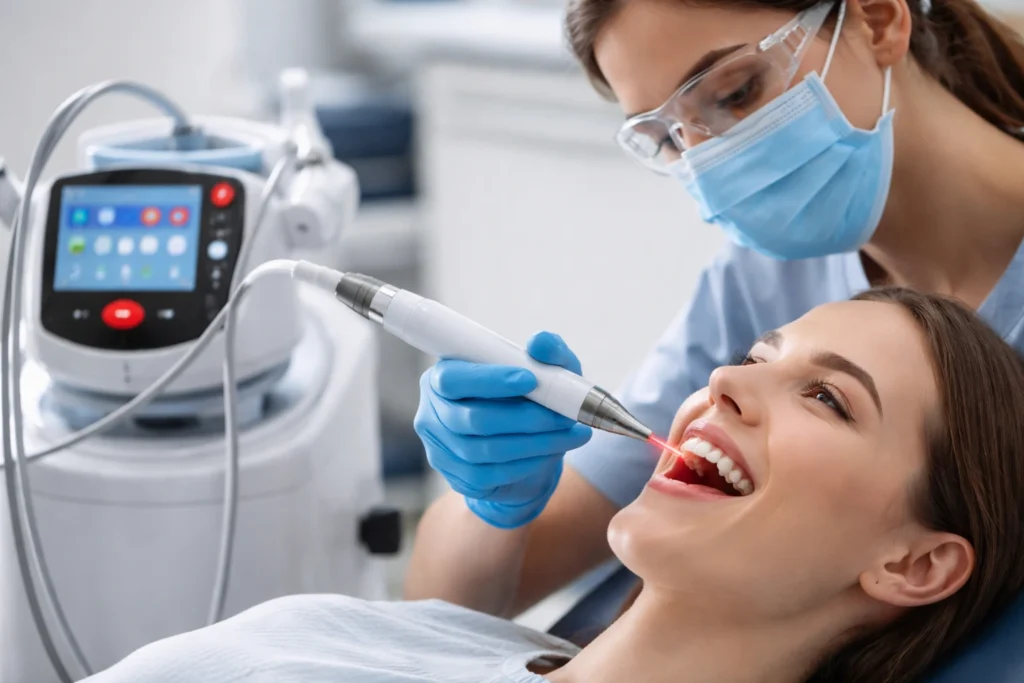
So, how are you feeling about dental lasers after reading this? We hope the basics feel a bit clearer and less intimidating now.
If you’re starting, diode and erbium lasers will cover most of your general practice needs. But firstly, you need the proper training to pick the right cases for each procedure.
With proper guidance and support, lasers can improve your clinical care. You can do this without compromising patient safety or comfort. And once you get comfortable with one laser, learning to use others will become much easier.
If you’re ready to learn more, visit GPIAG for equipment options, training resources, and ongoing support for your practice.