Did you know there are now over 20,000 dental clinics operating across Australia? With so much competition, patients notice clinics offering procedures that stand out from traditional dentistry. ASA laser dentistry gives your practice that edge.
ASA lasers change how common procedures work by removing tissue with precision that traditional tools can’t match. That improvement in precision and comfort often increases patients’ willingness to return for preventive care.
This article covers what makes ASA laser dentistry different from traditional methods, which procedures benefit most, and why pain-free treatment changes patient behaviour. You’ll also see how clinical efficiency improves when procedures take less time and healing happens faster.
What Makes ASA Laser Dentistry Different from Traditional Methods?
ASA laser dentistry uses synchronised dual-wavelength technology to treat oral health conditions more precisely than drills or scalpels. Traditional dental tools remove material through mechanical force (think grinding and cutting), whereas ASA lasers use focused light energy that works at the cellular level instead.
Here’s what that actually means for your practice.
The Science Behind Photobiomodulation in Oral Health
ASA lasers work through a process called photobiomodulation. This process is thought to stimulate mitochondria in cells to produce Adenosine Triphosphate (ATP), which supports the body’s natural healing.
Think of mitochondria as tiny batteries inside each cell. When laser light hits them, they charge up and get to work faster. This triggers biological responses that speed up tissue repair after procedures.
The practice itself isn’t new. Medical professionals have used it for over 50 years to treat sports injuries and chronic pain. According to research from Harvard Medical School, photobiomodulation helps reduce pain and inflammation while accelerating recovery. That’s why veterinarians, physiotherapists, and doctors started using it long before dentistry caught on.
Precision Medicine Delivers Accurate Treatment Results
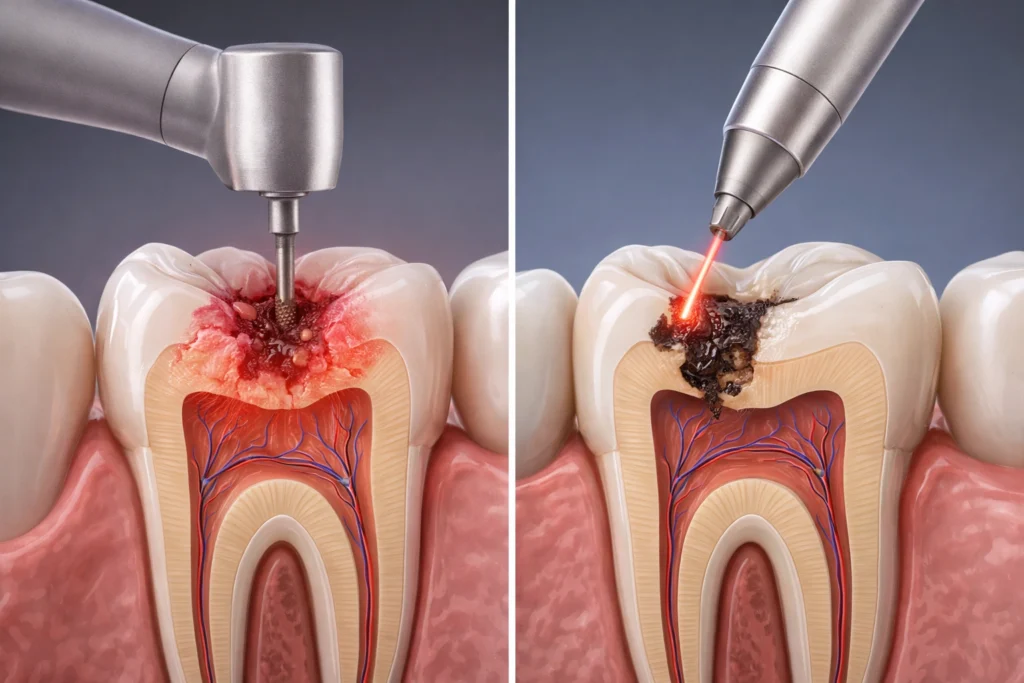
ASA technology targets the exact problem area without damaging healthy tissue around it. Traditional tools can’t do this. A drill removes everything in its path, healthy or not. A scalpel cuts a wider area than necessary because surgeons need room to work.
Lasers, however, adjust to each patient’s specific anatomy in real time. The beam width, intensity, and wavelength all adapt based on what their tissue needs. This is made possible by computer-assisted precision, which eliminates guesswork.
This is important because every patient heals differently. Their tissue density, blood flow, and immune response vary from person to person. ASA lasers account for those differences automatically, which is why recovery times and comfort levels improve so dramatically compared to traditional methods.
Common Procedures That Work Better with ASA Lasers
The best part about ASA technology is that it works across nearly every procedure you already perform daily. This means you’re not investing in equipment that only handles one or two specific cases.
Some of the most common applications include:
- Tooth Decay: Nobody enjoys cavity treatment, especially when the drill starts up. ASA lasers remove the damaged parts while leaving healthy tooth structure alone. Traditional drilling, on the other hand, often takes out more than necessary because the bit can’t distinguish between slightly weakened enamel and actual decay.
- Gum Disease: ASA therapy gets below the gum line to reduce bacteria and help tissue regenerate. The laser does this without the scraping and bleeding that traditional scaling causes. Your patients with periodontal disease often see their gum health improve within days, and pocket depths shrink faster than with conventional treatment.
- Extractions and Implant Placement: We’ve watched implant sites heal in our clinics when you apply ASA before and after surgery. Less swelling, less soreness, and patients often get back to eating normally much sooner. The tissue around implants recovers without that stubborn inflammation that usually slows things down.
These are everyday procedures that make up most dental visits, which means ASA technology benefits the majority of your patients, not just those needing specialised treatment.
How ASA Reduces Inflammation and Speeds Recovery
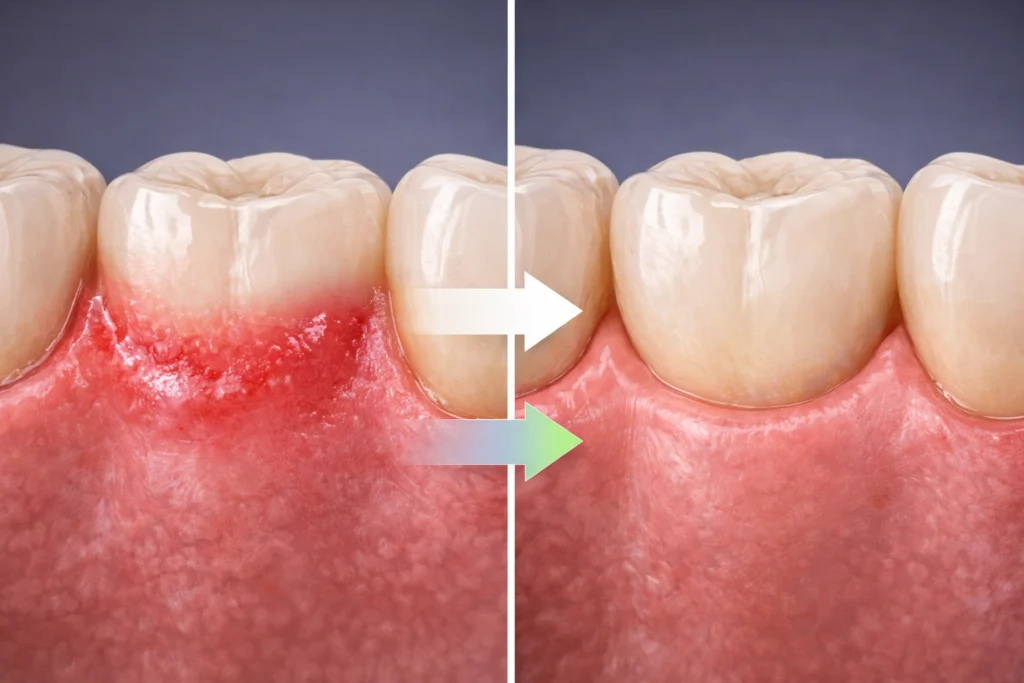
Wondering why some patients heal in days while others struggle for weeks after the same procedure? The difference often comes down to how well the body controls inflammation.
When you perform a procedure, the body naturally triggers an inflammatory cascade as part of its defence mechanism. But ASA lasers act early and use light energy to stop the cascade before swelling and discomfort escalate.
With the response under control and tissue calmer throughout healing, blood flow and oxygen delivery increase, which speeds tissue repair. This means patients notice less swelling and recover faster.
Clinical Efficiency: Less Time, Better Patient Experience
ASA lasers improve clinical efficiency in two noticeable ways. First, treatment sessions take minutes instead of requiring multiple appointments. Second, patients spend less time in the chair while still receiving comprehensive care.
Beyond scheduling benefits, the equipment itself changes how you work.
Operator Comfort During Extended Procedures
After eight hours of procedures, your hands and wrists notice the strain from heavier traditional instruments. With ASA’s lightweight handpiece, it’s easier to work through a full schedule because the reduced weight prevents fatigue from building up throughout the day.
Plus, the ergonomic controls let you make precise adjustments without twisting your wrist into uncomfortable positions, and the simple setup cuts down on physical stress between patients.
Managing Complex Health Conditions with Greater Accuracy
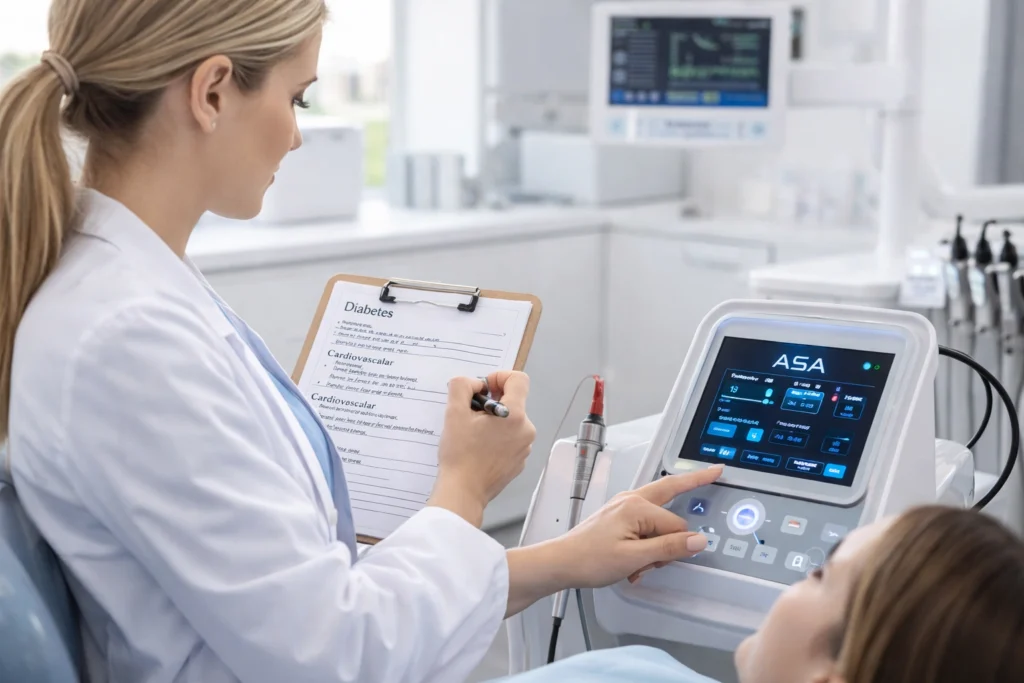
ASA lasers treat patients with diabetes or compromised immune systems safer than traditional surgical approaches. Since these lasers don’t create open wounds, they lower infection risk and accommodate the slower healing these patients face.
You can adjust treatment intensity for each patient’s specific conditions, which becomes especially important for those with cardiovascular disease or cancer, where even minor complications can escalate quickly.
Why Pain-Free Treatment Changes Patient Behaviour
Imagine your most anxious patient walking in relaxed, no sweaty palms or cancelled appointments. That’s what pain-free treatment does.
The drilling sound alone (even if it doesn’t hurt) triggers anxiety for many people. ASA removes both the noise and the sensation, breaking the psychological barriers that often keep patients away. When the experience doesn’t match their fear, patients’ behaviour changes.
The result? Patients who used to cancel or postpone appointments show up consistently. They refer friends and family after a genuinely comfortable visit. When people aren’t dreading their next appointment, they tackle small problems before they escalate into serious issues requiring extensive treatment.
Take the Next Step with ASA Laser Dentistry
ASA lasers change everyday procedures by improving precision, reducing recovery time, and creating pain-free experiences that patients actually appreciate. The technology fits naturally into most practices because it works across common procedures rather than just specialised cases.
Now you understand how ASA technology affects oral health outcomes and clinical efficiency. The gains in patient behaviour and practice workflow create noticeable differences in how you deliver care.
For more information about ASA laser systems and implementation support, visit GPIAG. We provide clear guidance to help practices adopt laser technology smoothly.