Clinics often overlook TGA approval checks, radiation licensing, and staff safety training when buying dental lasers. These steps sit outside the supplier’s paperwork. So if you miss them, you could face fines or even a forced shutdown.
But the problem is that many clinics assume that the supplier’s documents cover everything (it doesn’t). While suppliers handle their part of compliance, your clinic still has its own responsibilities under Australian law. This means you need to register the device, apply for radiation licences, and follow state-specific safety rules.
In this article, we’ll walk you through the regulatory gaps most clinics miss. You’ll learn how to stay compliant, avoid penalties, and keep your clinic safety on track from day one.
We’ll start by looking at the main compliance requirements for dental lasers under TGA and ARTG rules.
Dental Laser Compliance: TGA Approval and ARTG Requirements
Before buying a dental laser, you need to confirm it has TGA approval and is listed on the Australian Register of Therapeutic Goods (ARTG). You also have ongoing compliance duties as the end user. So let’s break down what you should check before and after your purchase.
Is Your Dental Laser a Therapeutic Good?
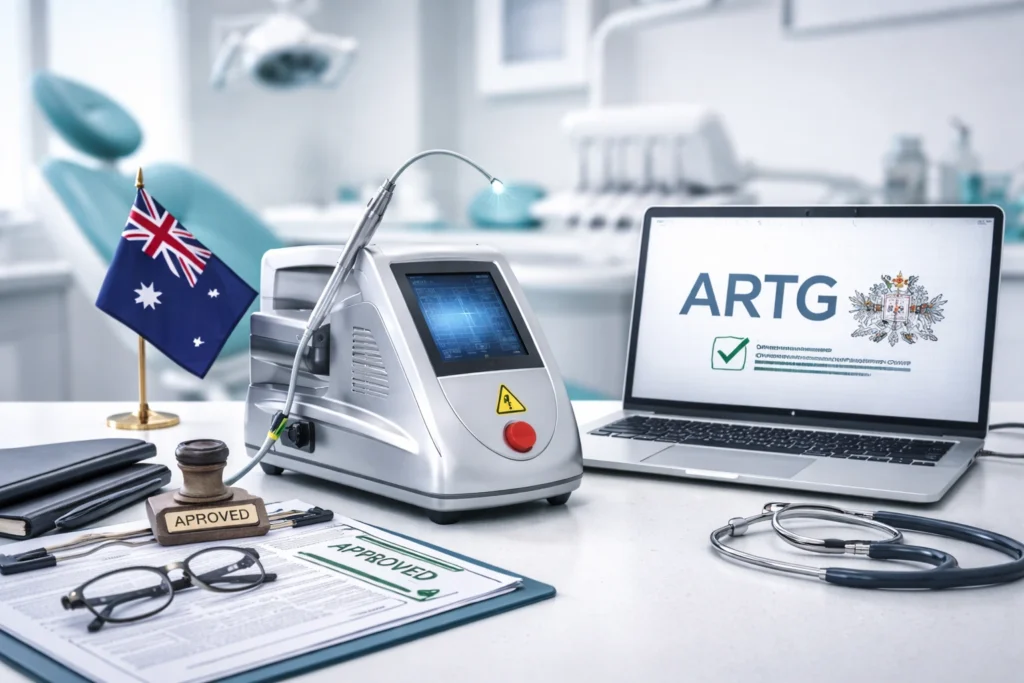
In most cases, yes. The TGA regulates any device used to diagnose, treat, or prevent health conditions in Australia. Since dental lasers treat oral tissue, they fall under this category.
Now, if you’re importing a laser directly or putting your clinic’s name on it, you’ll become the “sponsor.” This is a legal term that means you’re responsible for the product’s compliance instead of the overseas manufacturer.
But many clinic owners don’t realise how big this responsibility is. Basically, you need to handle incident reporting, keep records, and make sure the device meets Australian standards for its entire lifespan.
TGA Approval Explained
The TGA approves a device after checking its safety, quality, and performance. Once approved, the products get an ARTG listing with either an AUST R or AUST L number. AUST R means the device is registered and used for therapeutic purposes, while AUST L means it is listed and considered lower risk.
So, before you buy, always ask your supplier for this number. It’s your proof that the device is legally allowed in Australia.
Now, some devices may qualify for exemptions, but these situations are rare. But using unapproved therapeutic goods without proper approval could put you at risk of serious penalties, including fines or legal action.
If your supplier can’t show you a valid ARTG registration, treat that as a warning sign and look elsewhere.
Maintaining TGA Compliance After Purchase
Your compliance duties continue well after the sale goes through. As a sponsor, you must report any problems, keep accurate records, and make sure the device stays safe over time. Even as an end user, you should track any device issues and report them to the right authorities.
We’ve noticed that clinics often forget to log software updates and skip yearly safety reviews. They also sometimes misplace calibration records or fail to document staff training.
You can use a simple compliance calendar to help you keep track of these tasks and avoid last-minute stress.
Keep an Eye on Open Consultations
The TGA regularly updates its rules through open consultations. These public reviews can change how devices are classified or what paperwork you need to keep. If you miss these updates, your clinic could become non-compliant without any warning.
We recommend checking the TGA website once a month for any changes that affect dental lasers. You can also sign up for email alerts to get updates sent straight to your inbox. Staying informed is far easier than fixing problems after they show up.
Radiation Licensing: What Every Dentist Needs to Know
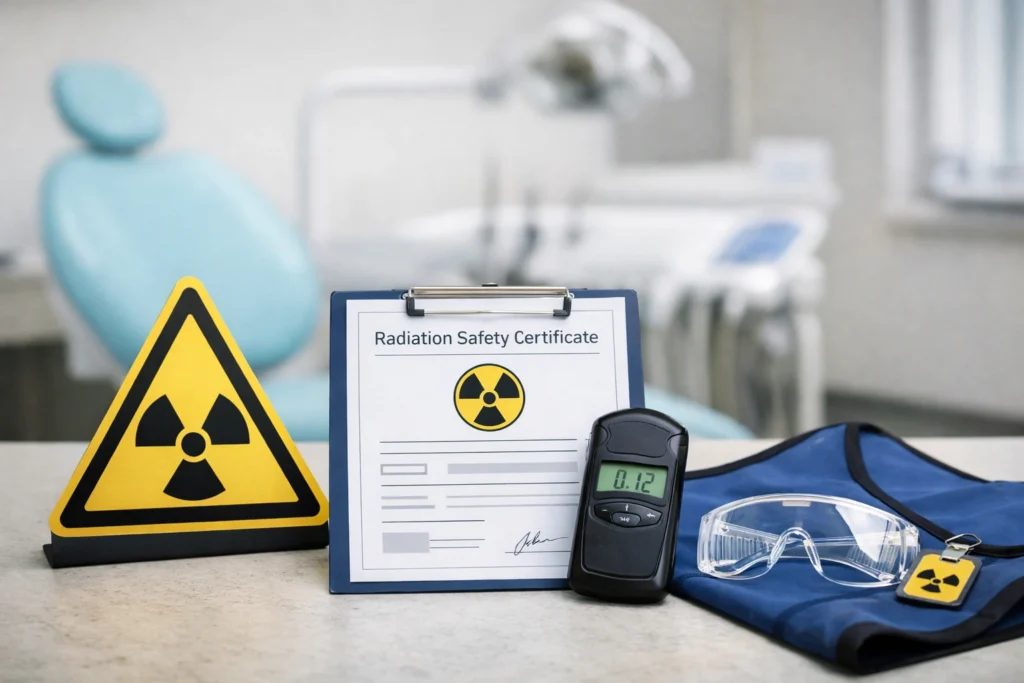
If your dental clinic uses lasers, X-rays, or imaging equipment, you need a radiation licence. Each Australian state has its own rules, so your requirements will depend on where your practice is located.
Here’s a walkthrough of what you need to have in place to stay compliant.
What Counts as a Radiation Source in Dentistry?
Any device that produces ionising or non-ionising radiation is considered a radiation source. In dentistry, this includes X-ray machines, certain curing lights, and dental lasers.
For dental lasers, the risk depends on their classification. Class 3B and Class 4 lasers are considered high-risk because they can damage eyes and skin if someone uses them incorrectly.
However, lasers aren’t the only radiation sources you need to think about. OPG machines, CBCT scanners, and handheld X-ray units also fall under radiation safety laws. If your clinic has more than one of these devices, you may need to register each one separately with your state’s radiation authority.
Managing State-Based Radiation Licensing
Australia doesn’t have a single national radiation licence, which can make things confusing. Instead, each state and territory runs its own system.
For example, in Victoria, you deal with the Department of Health. In New South Wales, it’s the EPA. Queensland has its own Radiation Health Unit. As you can see, the process and paperwork will differ depending on where you’re based.
On top of that, there are different licence types depending on your role in the clinic. A “use licence”, for instance, is for the person who actually operates the equipment. But a “management licence” is for the business that owns or controls the radiation source.
Most clinic owners will need both of these, though the exact requirements vary by state. If you’re not sure, call your local authority to double-check what applies to your situation.
Clinic Safety Protocols You Can’t Ignore
After getting your licences sorted, you need proper safety protocols running in your clinic every day.
For starters, your clinic must put up the correct warning signs near any radiation equipment. You also need appropriate shielding (lead barriers or protective screens) to protect both staff and patients from unnecessary exposure. These safety measures are required by Australian law for all radiation sources, including X-ray machines, certain curing lights, and Class 3B and 4 dental lasers.
Staff training is another area that often gets overlooked. Everyone who uses radiation equipment must have documented training on file. You should hold regular safety reviews as well (ideally once a year) to make sure your protocols meet current standards.
Skip these reviews, and your clinic will most likely face problems during audits.
The Risks of Getting It Wrong
Ignoring radiation licensing can cost you more than just money. Penalties vary by state, but fines can climb into thousands of dollars for serious breaches, like using unlicensed equipment or ignoring safety rules.
In some cases, authorities can suspend your licence or even shut down your practice until you fix the problem. That kind of disruption can hurt your reputation and your income.
You’ll also be surprised to learn how often clinics forget to renew a management licence when it expires. We worked with a clinic that kept operating their CBCT scanner without realising their paperwork had lapsed. It wasn’t intentional, but it still triggered an investigation and a hefty fine.
A simple calendar reminder could have prevented the whole situation. So if there’s one thing to take away from this section, it’s to keep track of your renewal dates.
Manage Dental Laser Compliance Effectively in Your Clinic
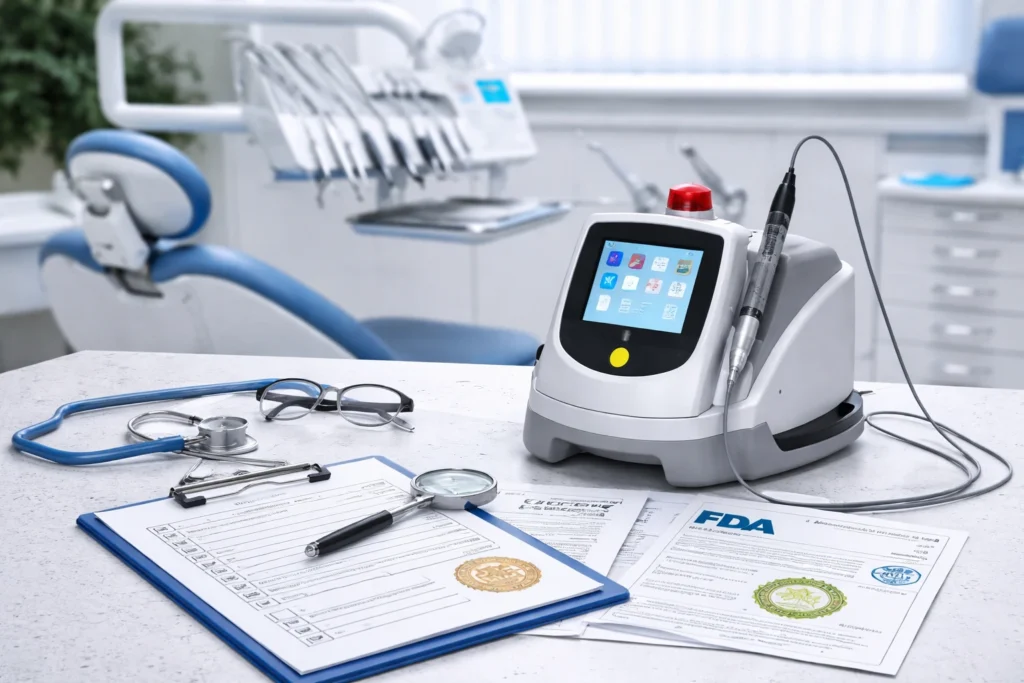
So, how does your clinic’s compliance setup look after reading this? If you’ve got a few questions, that’s a good thing. It means you’re spotting the gaps before they turn into bigger problems.
Remember, a simple framework can help you stay on top of things. Start by keeping all your documentation in a shared system so your team can access it easily. Then, assign one person to watch for changes in regulations from the TGA and state authorities. And make sure compliance is part of your induction process, so new staff know what’s expected from the start.
Checklists can be helpful too. They keep things consistent and give health professionals a clear record of what’s been done. Also, keep an eye on open consultations from the TGA. When you engage with these reviews, you get a say in how rules are shaped before they become law.
If you need a hand getting your dental laser compliance sorted, we’re here to help. Visit GPIAG to learn how we support clinics across Australia with TGA approval, radiation licensing, and clinic safety.