Your dental laser is one of the biggest investments in your clinic. But when was the last time you actually thought about its servicing?
Most practices only focus on equipment maintenance when something breaks. And by then, you’re already facing repair bills, cancelled appointments, and frustrated patients.
That’s exactly why we put this guide together. At Dental Laser Therapy, we’ve spent over 20 years in healthcare and more than five years importing and servicing ASA dental lasers across Australia. So we’ve seen firsthand what happens when maintenance gets pushed aside.
In the sections ahead, you’ll learn how regular servicing protects your equipment, keeps your clinical operations steady, and saves you money over time.
Ready? Let’s begin!
What Is Laser Servicing and Why Should You Care?
Laser servicing is the routine care and inspection that keeps your dental laser performing safely and accurately over time.
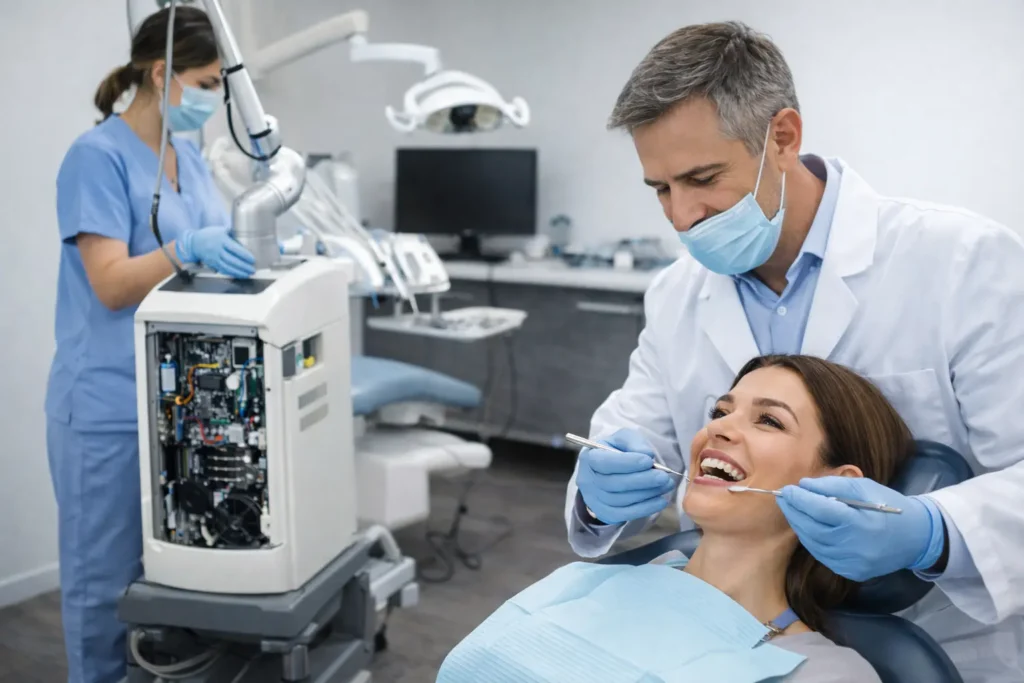
A typical visit includes calibration checks, fibre inspection, cleaning of optical components, and testing output levels. Each one of these helps your equipment deliver consistent results across every procedure.
There’s also a compliance side to consider. Since dental lasers emit concentrated light energy, they fall under radiation safety guidelines set by ARPANSA. This makes proper equipment maintenance an important part of meeting compliance standards in Australia.
Now, frankly, most clinics do not think about servicing until something goes wrong. But by that stage, you’re looking at longer wait times for parts and higher bills than a simple scheduled check would have cost.
How Equipment Maintenance Extends Your Laser’s Lifespan
Regular equipment maintenance extends your laser’s lifespan by catching wear early and keeping all components in working order.
When filters stay clean, calibration stays accurate, and connections stay secure, your laser doesn’t have to work harder than it should. That reduces strain on internal parts and helps the whole unit last longer.
So what does that look like in action? Let’s break it down.
What Wears Out Over Time
Dental lasers are sensitive machines with parts that degrade gradually. Optical fibres lose clarity, filters collect dust, and calibration drifts slightly with each use.
None of these changes is obvious at first. But over time, they affect how your laser performs during procedures.
Routine Checks That Pay Off
Through our firsthand experience working with clinics, we’ve seen how small maintenance tasks get pushed aside when schedules fill up. And when that happens, wear builds up faster than it should.
Fortunately, though, replacing filters on schedule, tightening connections, and recalibrating output settings takes minimal time and keeps your laser running the way it should.
The Payoff
Clinics that stay consistent with equipment maintenance often get three to five extra years from their lasers. That’s thousands of dollars saved on early replacements and fewer disruptions to your patients and team.
The Impact on Clinical Operations and Patient Experience
A well-maintained laser helps keep clinical operations running smoothly. Procedures stay on schedule, results remain consistent, and staff can focus on patient care rather than troubleshooting equipment. For busy clinics managing back-to-back appointments, that reliability makes a noticeable difference to the day-to-day workflow.
Patients pick up on these details, too. When equipment performs as expected, treatments feel professional and well-managed. On the flip side, a mid-procedure hiccup or a last-minute cancellation can shake that confidence. Some patients won’t say anything, but they’ll think twice before rebooking.
If you want your clinical operations to support a positive patient experience, your equipment needs regular attention. It’s one of the easiest ways to protect both your schedule and your reputation.
Predictive Maintenance vs Reactive Repairs: What Small Businesses Should Know
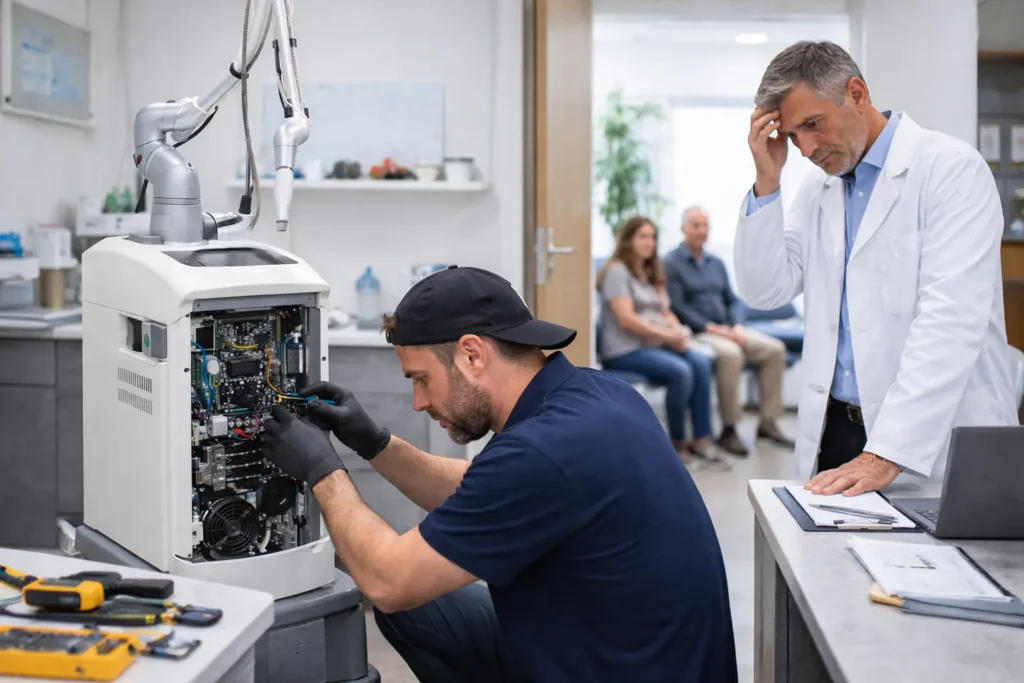
Unplanned equipment repairs can cost clinics thousands in emergency callouts and lost appointment revenue (yes, we do mean thousands, not hundreds). For small businesses running on tight margins, one breakdown can throw off an entire month’s budget.
So what’s the alternative? It comes down to two approaches.
| Approach | What It Means | Cost Impact |
| Reactive | Fix it after it breaks | Higher costs, unexpected downtime |
| Predictive | Scheduled checks before problems occur | Lower costs, fewer surprises |
Reactive repairs tend to hit harder because you’re paying for urgency. Parts need to be rushed, technicians charge premium rates, and your clinic sits idle while you wait.
Predictive maintenance, however, catches small issues during routine checks, so they never grow into emergencies. For clinics in New South Wales, the EPA’s laser safety guidelines also outline compliance expectations that regular servicing helps you meet.
Bottom line: A proactive approach helps you spend smarter and skip the panic when something fails without warning.
Now that you know why maintenance counts, here’s where to find the support to make it happen.
Online Resources and Support for Ongoing Care
Most equipment suppliers offer online resources to help clinics stay on track. These range from downloadable guides to troubleshooting videos, and many are free.

A few worth exploring include:
- User Manuals and Checklists: These outline servicing intervals and help you track what’s been completed.
- Troubleshooting Guides: Quick-reference tools for spotting common faults before calling a technician.
- Training Materials: Short courses or videos showing your team how to handle basic upkeep.
Having these resources on hand saves time and cuts down guesswork.
Don’t Wait for a Breakdown to Take Action
A little attention now means fewer headaches, lower costs, and a clinic that runs without nasty surprises. Regular laser servicing protects your equipment, your patients, and your reputation all at once.
The truth is, most breakdowns don’t happen out of nowhere. They build up slowly through skipped checks and delayed repairs. And by the time something fails, you’re paying more than you would have for a simple service visit.
So don’t wait until your laser forces your hand. Set up a basic maintenance schedule, stick to it, and give your equipment the care it needs to keep performing.